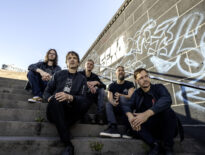
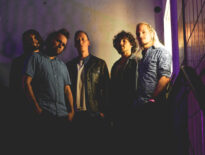
It took two attempts before it finally worked out for me to meet Gazpacho keyboardist Thomas Andersen for a Zoom interview. And although this meeting also began ten minutes late due to technical issues, Thomas devoted around 50 minutes of his time to us and offered deep insights into the philosophy behind the new album "Magic 8-Ball", the creation process of Gazpacho albums, and much more.

I've checked a little bit what happened in the past and our Gazpacho interviews were usually done by our Editor-in-chief, Klaus Reckert. And I realised that all these interviews were always with you. Is this a coincidence? Or are you really the "press person" in your band? And if that is your job, what do the others in the band do to compensate this? Do they have other roles while you're answering press enquiries?

Thomas: I sort of became the unofficial spokesperson in a way because I was in charge of writing the Facebook posts that we used to keep everyone updated on the band. And it just sort of happpened - I became the one who was responsible for that. So we function a little bit like almost everyone - each one of us has a very defined role, so we function a little bit like a company almost in terms of running the band. Yeah. We've got one guy who's in charge of "live playing", our bass player is in charge of live, which means that when we are rehearsing for tours, he is the boss. So he says, we are rehearsing this many times, if he doesn't like it, then he adds more rehearsals and we all just have to do exactly what he says. Yeah. So if he says, this is not good enough, I've booked three more rehearsals, then we have to do that. And if he says, okay, we're ready, then we're ready. Mikael, the violin player, is in charge of the technical aspects. So if we're doing gigs and we are syncing to film, and we've got our own separate in-ear monitoring as well, or we get click tracks and we get little voices that go one, two, three, and he's in charge of setting all that up, so that all works every time So because nothing ever works, you know, democracy never works, does it?
To a certain extent, of course. But my experience is, I remember those times, you know, living in the big cities, meeting with a big group of friends, not knowing what to do. And if you then discuss democratically, two hours later, you're still standing in the same spot, unless somebody is taking the initiative.

Thomas: Exactly. And a great other example of that is that a couple of days ago, my girlfriend and I were going to our cabin. And then I thought she was bringing the wine. I was bringing the wine. And then when we got there, she said, well, where's the wine? I said, well, you brought it. She said, no. And that's, again, it's a great example of the fact that if you are in charge of wine always, you know that, and I know that. And especially if you're poor. If you come to a small city in Holland. And there's a problem with the monitor or the in-ear monitors, it's great to know that Mikael's in charge. He will fix it. That's his job. He can ask for help, but that's his job. And I became the person who was sort of the spokesperson, because it's usually Jan-Henrik, the singer and I, who are in charge of getting the concepts and discussing what the songs are about. Jan-Henrik is very busy usually with work. And I think the other guys are a little bit scared. If you ask, what's the album about? Then I'm sort of the closest person that can answer that question.
That would have been my next question, because you don't probably know everything. So do you just not talk about the topics which are not your part or do you do before the interview season starts kind of a briefing that you kind of interview your bandmates about the things you don't know about an album, but where you think, oh, these questions could be asked and I don't want to stand there like an idiot.
Thomas: No, I like to think that I know absolutely everything that there is to know about this album. I've been involved with the whole process. I was there when we were recording the drums. I've been in talk with all the different guys who were recording the instruments, because I'm sort of a hub. All of the recordings come to me. And then I and Mikael are in charge of getting the whole album set up on Cubix, which in itself is a gigantic project. So I would like to think, I mean, unless you ask me, if you ask me what kind of strings are on the bass guitar, then I will have to say I have no idea.
Let's talk first a little bit about concept creation idea in general. So for me, I mean, I've been I've been following you. I don't know when I started following you, but the first time I saw you playing live, I think was 2005 in Butlins at a Marillion convention. But it needed a few more years at that time. You know, Internet was still small until I really got into you. But for me, it's always when I listen to a new Gazpacho album. I mean, you're so coherent in a way. The artworks, the logo, certain things don't change. The sound you have, it's very distinct. And for me, it always feels like there comes out a new volume of my, I don't know, my favourite book series. It's different, but the essence is somehow the same. But you don't know what's coming. And as most of your albums are concept albums, I mean, it even fits more in this picture. But when you have a new idea, or especially for this album, who has initiative? Where does the first spark come from? In which thematic direction you go? Is this all one person who has an idea and he develops this? Or the whole topic? I mean, musically, you're probably all working together. But when it's about the concept behind something, is this a group effort? And how specific was it here, in this case with "Magic 8-Ball"?
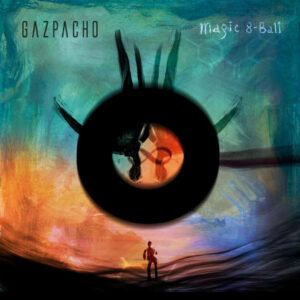
Thomas: Well, with all of the albums, everything starts off with a spark. And it's usually the other way around. So we always start with the music. And when the music, and this is going to sound very hippy and weird and strange, but I think the songs know what they are about. So we come up with ideas for some kind of demo of an instrumental. We make singing over that, always looking to create an atmosphere or mood. But we never know what it's about. So then once we made a demo, or generally we usually just sing anything. I mean, it could be other bands' lyrics. It could be the newspaper. It could be any words. Then once we have a demo, we write the melody. Then we sit down and talk about what could this be about.nSo what does this song sound like it's supposed to be about? And then the answer will come to us in the sense of the greater concept. Usually Jan-Henrik and I, we will sit and we'll talk about it. We're working on the song, and we'll say, well, this sounds a little bit like this or this. And we always talk about ideas for concepts. I mean, there's so many ideas that we have. It's crazy. So we have to pick one. And over the years, we've learned that the sooner you pick one, the better it is. If you have five good ideas, just take one and continue work on that. And in the case of "Magic 8-Ball", I like to think that it's a continuation on the themes which we started on the album "Molok". "Molok" was about someone who built a machine that could predict everything that's going to happen. And "Molok" was also about the difference or how the idea of God is probably less crazy than what science is actually telling us.
I mean, it's both incomprehensive for us humans. Both is, I mean, everything being random is unthinkable. And an existing God is just as unthinkable.

Thomas: Exactly. But also the idea of the Big Bang or quantum theory are all unthinkable. Or the fact that you're made from dead material. You know, everything, all the parts that are making you and me are dead. But when they come together, we are alive and we're having a Zoom call. You know, so everything is unthinkable. And the idea is that the major idea behind "Magic 8-Ball" was that if everything is, as you say, unthinkable, then the idea of God shouldn't be considered crazier than the idea of science or the idea of anything. Everything is crazy. So the fast forward that the Western world did towards secularism, I think if you went out in the streets now or if you called your friends and said, hey, guys, I believe in God, they would say, well, they would call each other after you finished the phone call and say, well, he's gone crazy. You know, Florian's lost touch. He's become one of those Christians now. You know?And there's something which is dangerous in throwing out religion that fast. We've had religion probably before we had cities. And when we threw out religion, we threw out because the structures of our minds, the structure of our psychology is built upon religious.The idea of God is in our minds somehow. And when we throw that out, throw out our traditions, we throw out our hope. We throw away our meaning. We throw away our history. We throw away our culture. We throw away our identity. We throw away our humanity. And we say, well, everything's random.
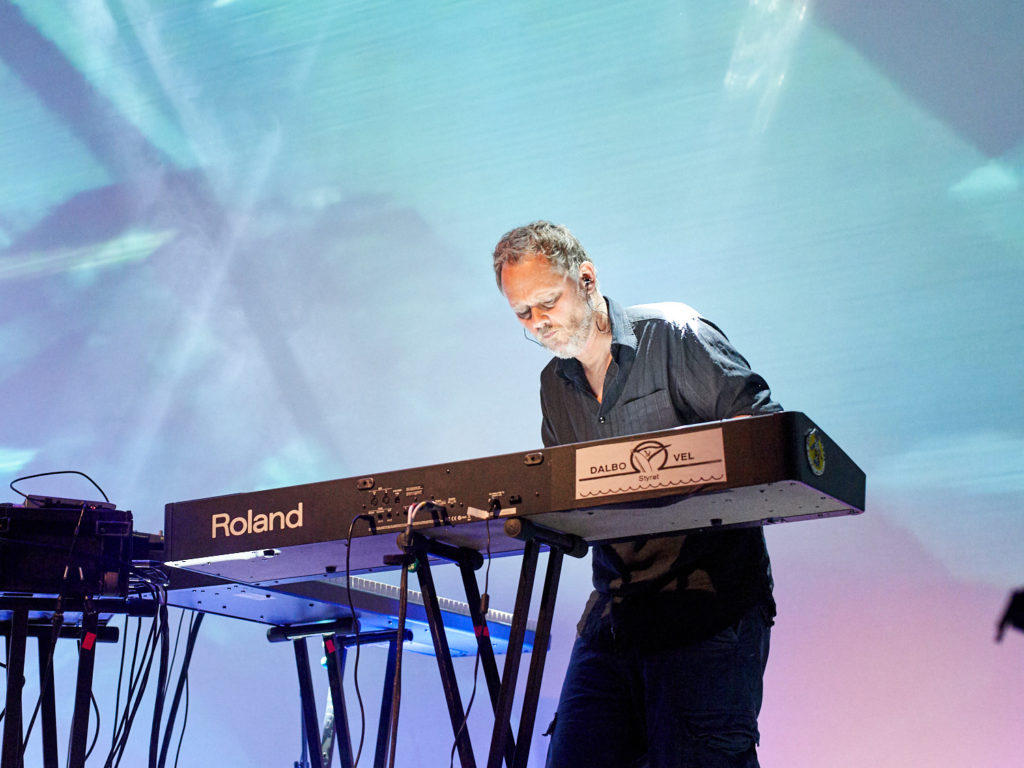
Religion in the end... what we created around it in the end is like a set of laws, something to give us a framework.
And I think you're completely right there. In the end, if you look into what religion is... You have religions, where everybody agrees that they are indeed a religion. If there are not enough followers, it's a sect. If you have something like, what's it called again? Scientology: that's a science fiction story that's turned into a religion. But then religion is basically defined of what you believe. And science is the fact. But then if we go into quantum physics and realise, oh, we have a wave AND particles and both concepts areso we l contradicting each other, we are again on very insecure ground. And if you see what science is happening, oh, maybe our universe is within a black hole, whatever. Still even in science to a certain point, it's believing. So in the end, it doesn't matter what it is, if it's science or if it's religion. What you say is that both can give us, both define our culture, our society, and both can give us a strong hold in the society to know where we are. But at the other side, as we are insecure with all of this, it gives you exactly the opposite. And it's cause of war and chaos.
Thomas: Yes, there are two points I'd like to say to answer that or to comment on that. The first comment is that to me, it doesn't matter if God exists. I think it's still important that we live as if God exists. Because if we don't, then if I go and kill my neighbour, my neighbour is made of atoms that are dead. And he is one of 8.5 billion people.
I stopped counting.
Thomas: Yeah, so did I.
When I was a child, it was six or something.
Thomas: Same with me. So if I kill him, that doesn't make any difference. If I'm cutting him, cutting off his head or cutting a piece of bread, there's no difference. Scientifically, there is no difference. The atoms remain. And his life is insignificant because scientifically, it has no value. I don't believe in the idea that in normal, we have a movement called humanism, which is trying to create morals in a world without God.
To me, it feels like bullshit. Either if you're going to walk the walk, you're going to have to talk the talk. And I think humanism is a lukewarm sort of excuse for a religion which isn't working. So we need to, it doesn't, I don't think, I don't think God itself has contacted us. So I don't think any of the religious books, I think they're all written by humans. And I think they're all, I think they're all the interpretations of God made by very, very wise men. And women, maybe. But of all religions. But at the same time, both, and this, I think this applies to all of us, is I think we all believe in magic. So I will, if I'm saying to you, well, I'm flying tomorrow, knock on wood, and I'll knock on wood. Or, for example, and I don't have a son, so I'm going to say a sentence now, but it would be very difficult for me to say, I hope my son dies in a horrible car crash tomorrow and that his death is painful. If I say that sentence, I know that it's not going to affect reality. You know, I'm not God, and I'm certainly not magical. But I'm scared of saying a sentence like that, because I think maybe it will happen because I said it. We're all playing the Euroball lottery, and we know our chances of winning are zero.
But sometimes you win.
Thomas: But we think maybe magically something good is going to happen to me one day too. So we live, believing a little bit in magic. And we should, and the other point, I'm going to try to collect my thoughts, and the other point was it doesn't matter if God is real or not. We should still live as if it is. Those are the points.
The point of "Magic 8-Ball" is, if all these things that happen to us are random, like maybe the ceiling is going to fall down and kill me now, it will just be a random event. Then the idea of "Magic 8-Ball" is to see all these different possible lives and all the different things that have happened to different people, and to illustrate that by taking eight stories and sticking them all on albums to show how different our destiny can be. All in this crazy world in which we live.
But these characters are eight different characters in one world? You didn't have the idea of having one character in, let's say, a multiverse of eight universes?

Thomas: No. So they all exist in this one world in which we find ourselves. And in itself, it just seems like a simulation, doesn't it? Yeah. There is enough in this world in which you and I live to create and have fun and experience billions of years. So we didn't need to create a multiverse. And another point, which while I'm remembering, is why we used the "Magic 8-Ball". Did you have Magic 8-Balls when you were a kid? I think that to me, if we're going to accept random, we might as well just shake a Magic 8-Ball and say, okay, I'm going to kill my neighbour. We took at least, as I mentioned earlier, all of the religious books and all the religious ideas are at least well thought out philosophical writings that have been thought about by very, very wise men. And if we're going to throw all that down, and now we're listening to influencers, and we've replaced God with a plastic toy. But we have all this technology, and we're advancing at an extremely fast rate technologically. But spiritually, we're Stone Age people. We haven't had any progress. I mean, if you look at philosophy, I know I'm talking a lot now, I'm sorry.
I mean, this is what an interview is all about.
Thomas: I'm sorry. But if you look at philosophy, we're still studying Plato and Aristotle. And in my opinion, and I include modern philosophy, we have not moved one single step further since the first philosophers. There has been no progress that I can think of.
Maybe one of the reasons is that the world is changing and that what has been said has always to be applied newly on the current situation.
So even if we learn something from the past, as our present is moving to the future, we cannot stick to what we analyse because we're still moving forward.
That's a good point. Maybe philosophy is always changing. Is that what you were saying?
Yes, because the world is changing .And this is why I believe it's still necessary to study the old philosophers and old texts and old books. Because how we applied things 20 years ago is something that doesn't necessarily fit anymore.
Thomas: No, that's very true. But at the same time, the human being will always, in some sense, be the same. So I think that if we were to travel back 300,000 years and we could meet some of the humans from that time, which would be the exact same model as you and I are, 100% same everything. And if we could speak their language, I'll bet you that two weeks living with them, we could have conversations like the one we're having now.
Definitely, because our basic needs, desires, wishes, fears, they remain the same. It's just an environment that changes. I think we could go on like this forever but I would like to stop with this topic now. So let's move a bit forward.
Thomas: Alright.
Your last album without a conceptual framework, I don't mean story, but the framework was was "Firebird", I think.
Thomas: "Firebird" was the last time we didn't have that. After that, we moved on to the concept.
So going back to what you said, that the music is first. When I think that music is first and a concept album comes out of this, that means for me in a way that either all the songs are in the same mood in a way or you change them so much that in the end it fits.
Thomas: No, they are all the same mood. We find some kind of some spark. And then we work towards that. Like many times, like in the case of "Night", we just had that one loop, which is the electric violin. And all of the songs are usually written from once we had that, we knew we had something and we wrote all the other songs to fit with that particular atmosphere of that one thing. And then once we had that, then the concept grew into let's just make this about what goes on in between awake and sleeping. Let's just do that.
So that sounds like it's a coincidental thing that's happening in a way or a subconscious thing. So it was not planned that you just don't write songs anymore that don't belong to each other? But hearing this, this could happen or you would have to make really a decision?

Thomas: The decision has already been made. We've had a lot of discussions on the fact that there are so many songs coming out. Sixty thousand new songs uploaded to Spotify. And we still believe that the album is something which is important. Now, when you listen to Spotify, this annoys me to hell. But let's say I want to listen to Genesis' "Selling England". I put on the first song in my car and then it skips to something else in song number two. And I'm like, no, no, no.
I want to put on the album. I want to listen to an album. I think the album is an art form. It's still alive.In the days of streaming, it's becoming more and more difficult. And I think we're a dying breed of people who listen to full albums. I think the new generations are listening to songs on playlists where they pick the favourites.
It's more curated music, less listening to an artist, but more to somebody who made the playlist.
Thomas: And even when you go to Spotify, if I want to listen to Genesis, then they've got a special place called "This Is Genesis". And I don't want to listen to "This Is Genesis". I want to listen to an album because I know they made that album. So I sit in the studio saying, this is song number one, this is song number two. I want to follow the narrative of the album.
Otherwise you get 'I Can't Dance' after 'The Silent Sun' and that's a bit weird.
Thomas: And it just doesn't work. So to me, we consciously try to make concept albums because we think that not enough concept albums are being made.
I have a question I which fits quite into the whole conversations we had so far:"
In a time of rapid information flow, constant stimuli and click-driven culture, what role do you think art, especially music, can still play today? Where do you feel we currently stand as a society in this? I think the second part is already answered. But what do you think art can still play? You say you do the concept album because there is this movement. In the Prog & Artrock circus, you are a name. But the mainstream in music is way smaller for example, in the 90s. In the 90s, you knew all famous band of all genres. But there was nothing around. Nowadays, the mainstream is really small but the mass of how much music is out there, you need a curator. You make your art form. Are you satisfied with what you have reached ? What is your target? What do you think is still possible with what you are doing?
Thomas: Well, this is a great question. Because we are still trying to make the perfect concept album. As I've said a billion times. I've probably said this so many times, it'll bore you. But if you listen to Kate Bush's "Hounds of Love", to me that is the perfect concept album. Everything is perfect. And we are trying to make something which is just as good from a male perspective. That's the goal. We're never going to reach that goal. Because there's no way we're ever going to be able to match Kate Bush.But maybe something interesting will come from the attempt. And that's our main goal. When it comes to the click-driven culture, which you were asking about earlier, or talking about earlier. I have two ways of looking at it. Number one is I think it's very dangerous territory. I think we're becoming stupider. I think we're becoming very quick, but stupid thinkers. I think it's very scary. And I am very afraid of TikTok.
And I'm afraid for the kids of today. I think they are in hell. I think we have created hell for them. Because of this, as we mentioned earlier, the spiritual poverty, but the technological extreme wealth. Which means that even a poor kid can still be on TikTok and have his brain destroyed. But there's another side of me that thinks that in the TikTok world where you have maybe maximum 10 seconds, someone will create high art. There will be someone that can make a 10-second song that is fantastic. Someone, a genius, will come out and be able to make something absolutely, unbelievably beautiful within those formats. So we're still waiting for that to happen. I'm scared of it, but I think there will always be someone that can do something interesting with any form of new technology.
Your musical development. Like I said before, Gazpacho feels like Gazpacho. You have your concept albums, you have new stories. Once you listen, you're back home. I mean, you have stuff like on the new album, like 'We Are Strangers'. I think we could go on forever. That's feels a little bit like space rocky. But in general, do you see in your band a musical development still? Or have you just settled to where you are, where you feel comfortable? Are you still open? Do you still incorporate new stuff? Or does it happen by coincidence if it happens?

Thomas: The worst thing is that every time I make a new album, we're always trying to change the stature. We're fighting really hard to try to sound a little bit different.We're always trying to go new routes.And then what happens is exactly what you say. It ends up as a Gazpacho album, no matter how much we tried to fight our way out of the format. So I think it's just the way it becomes. And my theory is the reason is that Jan-Henrik's voice is so distinct. So I think the moment he sings, it's a Gazpacho song. And it's just it's that thing you're talking about. It's like putting on an old jacket. And yeah, this is my old jacket.
But it's more than his voice.
Thomas: Yeah, well, it's also my second theory is that we have a certain taste for some chord structures. I've been struck recently working on the new album that I don't know what TV you watched when you were growing up. But in Norway, we watched a lot of old Czech and Russian cartoons. When we grew up in Norway, we had one channel, which was a Norwegian national broadcasting corporation. And it bought a lot of material from Eastern Germany. It bought a lot of material from Russia, Czech Republic, probably. I don't know why, but it bought a lot of children's programmes. So growing up, we heard a lot of the music that they had on those old cartoons.
Which was sort of very, very Russian, classical, romantic, inspired sort of minor chord music, which had this atmosphere of just this intense sort of winter loneliness. And I think our taste for a lot of those chords probably make their way into the music. So there's always a certain sort of sad overtone to these.
You're not making happy music. I mean, it gives me a lot of happiness, but...
Thomas: Yeah, well, same with me, but these are sad chords. I think we would never write, we would never use blues chords. We would never do the E, A, you know, E, A, H. We would never use the normal chord structures. And we've never done that. I think it's probably a mixture of his voice and chord structures that make it sound so similar.
The thing is, this just comes to my mind, because for the end of the interview, I had a question about your band history, your relation to Marillion and so on, and your band name. But as you mentioned all of this, so when you look at albums where 'Gazpacho' is on, so something like 'Cannibal Surf Babe' as a big, big contrast on this "Afraid Of Sunlight" album would probably be unthinkable for you, or can you imagine something like this?
Thomas: I would think that, I'll bet you that 'Cannibal Surf Babe' is probably Steve Hogarth's idea. I'll bet you he fought that through against the other guys in Marillion. And I think in Gazpacho, then, we also have a couple of people, I won't mention their names, but we have a couple of very conservative guys. So I think if I came up with something like 'Cannibal Surf Babe', we'd probably say, no, no, no, no, no, no, no, no, no, no, man, no. So we are very conservative in what we put on our albums. I don't think that would happen unless you count something like 'We Are Strangers' or if you look at the album 'Molok', we have 'Bela Kiss', which is a folky sort of tune. So there are some things that go a little bit off the script, but we have a very strong editorial presence in the band. It keeps the train on the track.
I think this could be a concept. Very interesting to make an album only with songs only one of you is behind and the others say, OK, let's do it.
Because Gazpacho is usually very coherent. And from what you say now is that a lot of the edges that each of you has probably doesn't find into your music. But then I'm not really aware of, does anybody of you guys have side projects? So if you have these aspects in your musical taste, which don't find a way into Gazpacho, is there a place to live it out for you guys?
Thomas: No, not really. It's... I mean, my job is making jingles for radio. OK, so I make songs for like TV, a commercial for a car. I've got the latest music on BMW. So I make a lot of those songs, but none of those have edges either. They're all very safe. But at the same time, there is something to be said for having the editorial safety of knowing that if I have a crazy idea, then I've got some guys watching my back. So I don't because usually I find that if you have a really crazy idea, 90 times out of 100, you will regret it two years later. Because every time I make a new song, you would love it. Like, damn, this is good. And send it out to the guys and like, no, man, this is crazy. This is not happening. And then a couple of months go by and then you're angry with them, of course. But a couple of months go by and you realise that they were right. I think there's something to be said with we have this rule where every guy in the band has to be behind the song if it's going on the album. And I think it's a safety net that we all need because I'm not crazy enough to think that the whole world is interested in me. You know, if I have an idea which I think is genius, then if there are five other guys saying this is shit, there's a high chance that it's shit.
And unless you're the president of the US, it doesn't matter what you say. It's still great.
Thomas: So in that sense, I believe in a democracy. In terms of a safety net with some people who want the best for you or watching you back. So there is something good to be said for that. But that being said, we're still always trying to break out the dispatcher sound as much as possible, even though it never works.
I don't know if it was a mistake with the album I have or if it was a conscious decisom, but I didn't receive a lyric sheet with my vinyl. Was it just a mistake or is there a reason you didn't put it by? Which for me would be weird because a concept album with a topic, not being able to read the lyrics...
Thomas: No, that was a mistake. We're getting that fixed now. We're putting folders into the newer versions. So that was a mistake.
Since 'Firebird', you have been working with the same cover artist - Antonio Seijas. At what point does he come in? Is he part of the process like, there's only the music and we see where he is going with it?. Is the artwork maybe inspired by the music or is he inspired by text and music?

Thomas: He gets the demos before they have lyrics. And then he will start working with that. And sometimes we will write lyrics also from his pictures.
Sometimes we will update lyrics according to his pictures. Because we'll say to him, this is what we think the song is about. But we don't know. He will draw something. We will say yes or no. It comes. It goes back and forth. And he's part of the process. We consider him the seventh dispatcher.
That's what I just wanted to ask. Maybe next step would be to put him into your list of band members.
Thomas: Sure.
Because this sounds really like a cooperation process, not just somebody who is getting a task.
Thomas: Yeah.
That's cool. It's really nice.
OK, next question. When I go to your concerts, the music is not really for dancing or a mosh pit. Sometimes I think like a couch would be nice. But then when you are the seated concert, well, it gets a little bit too relaxed. What do you prefer as a band playing with your music, playing in front of a seated audience or standing audience? And why?
Thomas: Standing audience with lots of peers, because as you say, seated audience, it feels when you're playing to a seated audience, it feels like you're boring everyone. But also as what we feel doesn't matter. It's not interesting what we feel. But I think when I stand it, it just feels like because a concert to me is an audience is 50 percent of a concert. So we're both the band and the audience are trying to create a happening together. And it needs to be a cooperation for the audience's sake. I think it's better because their life will give the band more life, which will give them more life.
So, the last question for today. Like I said before, that goes back to your name, Marillion, your whole history. Your first record was on Record Records, you played at Marillion Conventions. And you named yourself after a Marillion song. The band hasn't been so active with new albums over the last years. What role does the band still play for you nowadays? How important are they still? And if you were to name Gazpacho today, would it still be a Marillion song? Would it still be 'Gazpacho'? Or would it be a different band?
Thomas: When it comes to Marillion, they are still... We toured with them in 2004. We became friends with them. We met them in April at the convention in Oslo. So the band Marillion are still... They do something which is, I think, unique, starting with Fish and continuing with Steve Hogarth, who are both great in their own areas. And they still do something which I'm missing from 99.999% of other bands with males. Steve Hogarth is one hell of a great singer. He has something magical going on. And he has a unique way of expressing his emotions, which I think is very, very strong. He has a magic touch to him. And it still is weird, because when I talk to him now, it's sort of strange. I talk to him, he's a friend, but at the same time he's the guy who was on the poster on my wall when I was a kid. It's just mind-blowing. I mean, it's amazing. And the guys at Marillion are great people, and they still take their music very seriously. So they are still in this with their hearts and their blood, and that is the most important thing. They are still not doing this for the money, which is incredible. Because if I was them, I'd be worrying about retirement and making sure I could grow up as much as possible. So the name Gazpacho, originally we wanted Gazpacho to be a band that made music like Marillion, but in the style of Latino music. It was a bit of a joke, and we wanted to call the band Gazpacho. Then we started writing songs, and they became, as I told you, we can't do anything other than Gazpacho music. And then it sounded so serious, and we thought, well, we'll keep the name because it's funny, so people don't think that we're pompous sort of arses.
But then musically you have parallels, which are not this Latino thing. So it still fits.

Thomas: It sort of fits, even though it's sort of crazy. And I've seen whenever I look at people on the internet, I see a lot of comments saying, what a stupid name. I think, well, yeah, it's a stupid name. But then again, the idea of a band having a name is kind of stupid anyway. If you think about it, Marillion, Yes, Genesis. And if you're going to be one of those punk people, it's called like Band A, Band B. There is no way to name a band that isn't stupid. Can you think of any bandname that isn't stupid when you think about it?
Probably, but on a certain level, they're all fun, they're all good. You get used to it or not. That's the point.
Thomas: So the lucky thing is, of course, that Gazpacho is at least something that only was taken by one other band, which was an Argentinian band, which I think still exists. God bless them. I hope you're watching. It's a 90s rock group from Argentina. But all in all, I don't care. It could be any name.
One last thing. You are booked already for the Midwinter Prog Festival in february? Are there already other tour dates set?
Thomas: We will be announcing the tour dates in a couple of days.We're waiting for the final confirmation for the UK London gig. But we're doing three gigs in Germany in April.
All right. Good.
That were more than 45 minutes. It was very informative. I could have asked way more about techniques, songs, whatever, but I think there's a lot of this written all over the Internet already and there's a little inside view into the way you think, philosophy, religion, God... That was quite interesting and it didn't feel so much like an interview.
Thomas: Sorry about that.
No, that's what I like.
Like I said, everything else, I can send you a list of questions for that I don't need to talk to you face to face.
For me, a good interview is if you end up in a conversation.
Thomas: Well, I think so, too, because if you don't end up in a conversation, that means that you don't have anything interesting to say. So it felt a little bit like we could have done this at a cafe or at a bar and it would have been an interesting evening.
Sie sehen gerade einen Platzhalterinhalt von Bandcamp. Um auf den eigentlichen Inhalt zuzugreifen, klicken Sie auf den Button unten. Bitte beachten Sie, dass dabei Daten an Drittanbieter weitergegeben werden.
Surftipps:
• Homepage
• YouTube
• Bandcamp
• Wikipedia
• Reviews, Liveberichte & Interviews
Wir möchten uns recht herzlich bei cmm dafür bedanken, dass sie sie uns dieses Interview ermöglicht haben.